Покари Пот

СОДЕРЖАНИЕ
История [ править ]
Pocari Sweat был запущен в 1980 году в Японии Рокуро Харимой, сотрудником компании Otsuka Pharmaceutical, который придумал эту идею после наблюдения за врачом, который пьет раствор внутривенно для регидратации. [1]
Расширение в Азии [ править ]
Имя [ редактировать ]
Маркетинг [ править ]
Pocari Sweat сохраняет ту же бело-голубую цветовую схему с момента своего создания в 1980 году. Первоначально продаваемый в банках объемом 245 мл, с 1990 года он продавался преимущественно в форме бутылок [1].
Оцука начал целевую маркетинговую кампанию в Индонезии после вспышки лихорадки денге в 2010 году, продвигая этот напиток для предотвращения обезвоживания, распространенного симптома болезни. Pocari Sweat также имеет производственные предприятия в Индонезии под управлением компании «PT. AMERTA INDAH OTSUKA», которая является аффилированной с основной компанией Otsuka. Его офисы расположены в Сингапуре. [1]
15 мая 2014 года Pocari Sweat начал проект по отправке «капсулы мечты» на Луну. Капсула будет иметь ту же форму, что и банка Pocari Sweat, и будет заполнена порошком Pocari Sweat. Когда он появится, Pocari Sweat станет первым коммерческим продуктом, рекламируемым на Луне. [10] Первоначально запланированный запуск на ракете SpaceX Falcon 9 в октябре 2015 года [11] в настоящее время запланирован на посадочный модуль Astrobotic Technology, который будет запущен в 2021 году. [12]
Pocari Sweat
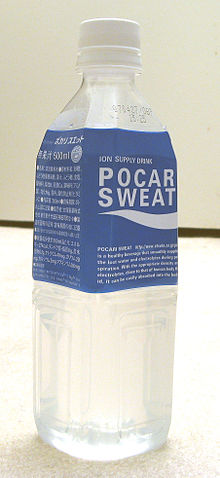

Название
Буквальный перевод англ. Pocari Sweat — «Пот Покари» — имеет юмористический оттенок для носителей английского языка. Однако оно изначально было выбрано производителями для маркетинга продукта в Японии, [2] где рядовые покупатели обычно не переводят названия, написанные на английском языке. Предполагается, что при употреблении напитка восстанавливаются питательные вещества и электролиты, которые человек теряет при потоотделении. [3] [4] Первая часть названия, «Покари», не имеет никакого смысла; слово было выбрано из-за «яркого звучания». [5]
Примечания
Ссылки
Полезное
Смотреть что такое «Pocari Sweat» в других словарях:
Pocari Sweat — nihongo|Pocari Sweat|ポカリスエット| Pokari Suetto is a popular Japanese soft drink and sports drink, manufactured by Otsuka Pharmaceutical Co., Ltd.. It was first sold in 1980. Pocari Sweat is a mild tasting, relatively light sweet drink and advertises … Wikipedia
Pocari Sweat — Eine Dose Pocari Sweat Pocari Sweat (ポカリスエット) ist ein bekanntes japanisches Erfrischungsgetränk und Sportgetränk, hergestellt von der Ōtsuka Pharmaceutical Co., Ltd.. Das Getränk wird seit dem Jahr 1980 verkauft. Produziert wird es auch in Hong… … Deutsch Wikipedia
Pocari Sweat — Le Pocari Sweat (ポカリスエット) est une boisson énergisante japonaise très populaire vendue par Otsuka Pharmaceutical Co., Ltd. Elle a été commercialisée pour la première fois en 1980. Contrairement à ce que le terme sweat pourrait suggérer, elle n a… … Wikipédia en Français
Pocari Sweat Open — The Pocari Sweat Open was a golf tournament on the Japan Golf Tour from at least 1984 to 1994. It was played in April at the Hakuryuko Country Club in Hiroshima.Winners this list may be incomplete *1994 Yoshi Mizumaki *1993 Shinji Ikeuchi *1992… … Wikipedia
Sweat (disambiguation) — Sweat may refer to:Beverages* Pocari Sweat, a popular Japanese soft drink and sports drink first sold in 1980Biology* Sweating, a biological method of cooling, excreting fluids from the: **Eccrine sweat glands **Apocrine sweat glandsCooking*… … Wikipedia
Otsuka Pharmaceutical Co. — abbreviated OPC, is a pharmaceutical company headquartered in Tokyo, Osaka and Naruto, Japan. The company was established August 10, 1964, and currently has approximately 27,000 employees worldwide. The company focuses on pharmaceuticals related… … Wikipedia
Otsuka Pharmaceutical — Co., Ltd. (大塚製薬株式会社, Ōtsuka Seiyaku Kabushiki gaisha?) (TYO: 4578), abbreviated OPC, is a pharmaceutical company headquartered in Tokyo, Osaka and Naruto, Japan. The company was established August 10, 1964, and currently has approximately 27,000… … Wikipedia
Foreign branding — is an advertising and marketing term describing the implied cachet or superiority of products and services with foreign or foreign sounding names. Contents 1 Non English brand names in English speaking countries 2 English brand names in non… … Wikipedia
UVERworld — Infobox musical artist 2 Name = UVERworld Img capt = deletable image caption Background = group or band Birth name = Alias = Sangoku Road (Sound Goku Road) (Pre debut) Born = Died = Origin = Japan Instruments = Genre = J Rock/J pop Occupation(s) … Wikipedia
Yomiuri Open — The Yomiuri Open was a golf tournament on the Japan Golf Tour from at least 1979 to 2006. In 2007 it merged with the Mizuno Open to form the Gateway to the Open Mizuno Open Yomiuri Classic. It was played at the Yomiuri Country Club in Hyogo from… … Wikipedia
Pocari sweat что это

POCARI SWEAT
500ml Bottle
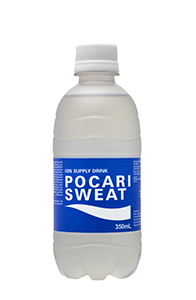
POCARI SWEAT
350ml Bottle
Available in UAE and Oman
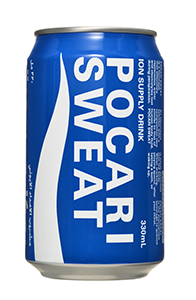
POCARI SWEAT
330ml CAN

POCARI SWEAT
74g Sachet for 1 liter

POCARI SWEAT
13g Sachet for 200ml
Available in Bahrain and Kuwait
Scene
When will POCARI SWEAT quench your body thirst?
Running
Sport
In flight
At office
Sahur/Iftar
Fever
Diarrhea
Heat stroke
Hydration School
Water accounts for about 60% of our body weight.
If you weight 60 kg, your body will contain a whopping 36 kg of water.
It’s fair to say that “the human body is made of water.” The liquid in the body is called “bodily fluid.” About 4.6 billion years ago, the first life forms on Earth were born in the sea.
Over time, life evolved from sea to land, eventually resulting in the rise of human beings. This is the reason why the composition of our bodily fluid is similar to that of seawater containing ions (electrolytes). We could say that our body has its own “inland sea.”
People lose fluid from their body in all kinds of everyday activities.
We sweat not only when we play sports, but also when we take a hot bath, while we sleep, and while we travel to work or school, and even as we just sit in our office or school. Sweating plays an important role in all these situations, by keeping our temperature constant. When our body temperature rises, sweat is generated to cool the body. Cooling occurs because heat is absorbed from the surface of the body when the sweat evaporates. This cooling effect is similar to sprinkling water on a hot road in summer.
Thanks to our sweat, which keeps our body temperature constant in this way, our bodies are able to function normally and remain healthy.
In addition to freshwater, the fluids (liquids) in our bodies contain sodium and various other ions. This is why sweat is salty. Therefore, when the body sweats a lot, it loses sodium as well as water, disrupting the balance of ions in the body and making it impossible to live a healthy life.
POCARI SWEAT is a beverage that has an ion balance very close to that of bodily fluids. It allows you to smoothly replenish your body with the water, sodium, and other ions (electrolytes) you lose by sweating.

Even living very normally, we typically lose 2.5 l of water from our bodies each day, through urination, sweating, and respiration. Of this 2,500 ml, 1,500 ml is lost in urine, 100 ml in feces, and 900 ml through the skin and respiration. In contrast, our typical daily fluid intake from drinks and food is also 2.5 l. Like this the total volume of bodily fluids is maintained at a constant level. The sensation of thirst that we feel after sweating heavily is a part of the body’s mechanism for trying to restore lost fluid to the body.

By drinking only water we cannot recover properly from dehydration.
It is not possible to adequately restore lost bodily fluids just by drinking plain water. What is “spontaneous dehydration”?
Drinking only plain water to rehydrate the body may even be counterproductive in some cases.
If we continue to drink only water, excess water will be discharged from the body, as way of trying to keep the concentration of ions in the body fluid constant. For this reason, a phenomenon known as “spontaneous dehydration” occurs, in which the volume of bodily fluid cannot be adequately restored. In this situation, our brain causes our sense of thirst to disappear, to prevent us from diluting our bodily fluid further, even though our body has not recovered from dehydration. This can be dangerous, because we may be unaware of our lack of fluid.
Water is lost from the body before you notice it.
Even if you don’t notice it yourself, your body will become dry over time.
Even while we rest or sleep, our bodies lose fluid through the skin and by expiration. Since we cannot usually feel this release of moisture from the body, it is referred to as “insensible perspiration.” The amount of insensible respiration varies greatly with conditions, but it is estimated to be around 900 ml per day for a healthy person. Even when the body does not sweat, such as in an air-conditioned indoor space or on a dry winter day, we lose moisture from the body. So by the time we feel thirsty, the body is already quite dry.
When we play sport or work in sweltering hot weather, we sweat heavily.
When sweat is evaporated, it removes heat from the surface of the body, helping to lower the temperature of the body after it heats up. Temperature regulation is an important function of sweat. If you sweat a lot and lose a lot of body fluid, you won’t be able to lower your body temperature. It is a bit like car that overheats. If our body loses just 3% of its fluid, we experience symptoms like strong thirst, grogginess, and loss of appetite; if we lose 4 to 5% of our loss, dehydration occurs, with symptoms of fatigue, headache, and dizziness. A body fluid loss of 10% or more can result in death. Many years ago, people were commonly advised to avoid drinking water while exercising. Now that the importance of rehydration is better understood, however, active rehydration during sports is widely encouraged. Experiments have demonstrated that adequate rehydration helps to maintain exercise performance.

For effective hydration, beverages with a salt concentration of 0.1 to 0.2% are recommended. This corresponds to 40 to 80 mg of sodium per 100 ml drink. POCARI SWEAT contains 49 mg of sodium per 100 ml.
In one experiment nine health adults were dehydrated by 4% of their body weight and then given water and POCARI SWEAT to drink in quantities equal to the volume of dehydration. When they drank only water, the quantity of blood plasma (a liquid blood component that indicates whether fluid has really entered the body), did not recover from dehydration. When they drank POCARI SWEAT they recovered from dehydration more quickly than when they drank water. This result demonstrates that POCARI SWEAT can smoothly replenish the body with the water and ions (electrolytes) that are lost by sweating.

The fluid lost from the body through sweating is not just plain water. It also contains ions (electrolytes) such as sodium and potassium. If we only drink water when we sweat heavily, the sensation of thirst will subside and the volume of urination will increase, even though the body has not recovered from dehydration, because the body reacts to prevent further dilution of body fluid. For this reason, when we sweat heavily it is good to drink POCARI SWEAT, because it has an ion balance close to that of body fluid. This benefit has been proven in a variety of studies and investigations.

On top of the fact that the bodies of young children have a higher proportion of water compared to adults, their temperature regulation function is also immature. This means that it takes little to disrupt the body fluid balance of a child. A baby in a stroller on a hot summer day is just a short distance from hot asphalt, in an environment that much hotter than we might imagine. Furthermore, a child wearing a hood to prevent sunburn will be exposed to even higher temperatures, resulting in even worse dehydration. It is also important to be careful when children are in child car seats. Children may not be able to complain of thirst on their own. And if they get absorbed in play they can easily forget about rehydration. Parents must be very careful to ensure that children are replenished frequently with water and ions (electrolytes).
Elderly people tend to have less fluid in their bodies than young people, because they generally have lower renal function and less muscle. (Muscle is a type of tissue that contains a large amount of fluid.) They are at a higher risk of suffering dehydration, because they find it more difficult to feel thirst and also because their temperature regulation function and resistance to heat deteriorates with age. In recent years, many cases of heat stroke have occurred indoors, so proper space temperature control and rehydration are essential for health management in the summer. It is necessary to actively rehydrate the body before feeling thirsty. Other risk factors for older people are the common tendency to restrict liquid intake to avoid going to the toilet too often, and fluid loss that occurs due to the side effects of medication for chronic illness. Regardless of the season, we should make it a daily habit to drink fluids frequently. POCARI SWEAT is an ideal beverage for minimizing the health risks of dehydration.
Let’s look at some everyday activities.
We constantly lose water and ions from our bodies, not just when doing sports, but in all kinds of casual everyday activities. The lost fluid and ions can be smoothly replenished with POCARI SWEAT. Here is an idea of how much fluid we lose in different activities.
Sitting approx. 4 hours at approx. 23°C approx. 200 ml
Commuting approx. 1 hour at approx. 27°C approx. 200 ml
Sleeping approx. 8 hours at approx. 29°C approx. 500 ml
Playing soccer approx. 1.5 hours at approx. 26°C approx. 200 ml
Water accounts for about 60% of our body weight.
If you weight 60 kg, your body will contain a whopping 36 kg of water.
It’s fair to say that “the human body is made of water.” The liquid in the body is called “bodily fluid.” About 4.6 billion years ago, the first life forms on Earth were born in the sea.
Over time, life evolved from sea to land, eventually resulting in the rise of human beings. This is the reason why the composition of our bodily fluid is similar to that of seawater containing ions (electrolytes). We could say that our body has its own “inland sea.”
People lose fluid from their body in all kinds of everyday activities.
We sweat not only when we play sports, but also when we take a hot bath, while we sleep, and while we travel to work or school, and even as we just sit in our office or school. Sweating plays an important role in all these situations, by keeping our temperature constant. When our body temperature rises, sweat is generated to cool the body. Cooling occurs because heat is absorbed from the surface of the body when the sweat evaporates. This cooling effect is similar to sprinkling water on a hot road in summer.
Thanks to our sweat, which keeps our body temperature constant in this way, our bodies are able to function normally and remain healthy.
In addition to freshwater, the fluids (liquids) in our bodies contain sodium and various other ions. This is why sweat is salty. Therefore, when the body sweats a lot, it loses sodium as well as water, disrupting the balance of ions in the body and making it impossible to live a healthy life.
POCARI SWEAT is a beverage that has an ion balance very close to that of bodily fluids. It allows you to smoothly replenish your body with the water, sodium, and other ions (electrolytes) you lose by sweating.

Even living very normally, we typically lose 2.5 l of water from our bodies each day, through urination, sweating, and respiration. Of this 2,500 ml, 1,500 ml is lost in urine, 100 ml in feces, and 900 ml through the skin and respiration. In contrast, our typical daily fluid intake from drinks and food is also 2.5 l. Like this the total volume of bodily fluids is maintained at a constant level. The sensation of thirst that we feel after sweating heavily is a part of the body’s mechanism for trying to restore lost fluid to the body.

By drinking only water we cannot recover properly from dehydration.
It is not possible to adequately restore lost bodily fluids just by drinking plain water. What is “spontaneous dehydration”?
Drinking only plain water to rehydrate the body may even be counterproductive in some cases.
If we continue to drink only water, excess water will be discharged from the body, as way of trying to keep the concentration of ions in the body fluid constant. For this reason, a phenomenon known as “spontaneous dehydration” occurs, in which the volume of bodily fluid cannot be adequately restored. In this situation, our brain causes our sense of thirst to disappear, to prevent us from diluting our bodily fluid further, even though our body has not recovered from dehydration. This can be dangerous, because we may be unaware of our lack of fluid.
Water is lost from the body before you notice it.
Even if you don’t notice it yourself, your body will become dry over time.
Even while we rest or sleep, our bodies lose fluid through the skin and by expiration. Since we cannot usually feel this release of moisture from the body, it is referred to as “insensible perspiration.” The amount of insensible respiration varies greatly with conditions, but it is estimated to be around 900 ml per day for a healthy person. Even when the body does not sweat, such as in an air-conditioned indoor space or on a dry winter day, we lose moisture from the body. So by the time we feel thirsty, the body is already quite dry.
When we play sport or work in sweltering hot weather, we sweat heavily.
When sweat is evaporated, it removes heat from the surface of the body, helping to lower the temperature of the body after it heats up. Temperature regulation is an important function of sweat. If you sweat a lot and lose a lot of body fluid, you won’t be able to lower your body temperature. It is a bit like car that overheats. If our body loses just 3% of its fluid, we experience symptoms like strong thirst, grogginess, and loss of appetite; if we lose 4 to 5% of our loss, dehydration occurs, with symptoms of fatigue, headache, and dizziness. A body fluid loss of 10% or more can result in death. Many years ago, people were commonly advised to avoid drinking water while exercising. Now that the importance of rehydration is better understood, however, active rehydration during sports is widely encouraged. Experiments have demonstrated that adequate rehydration helps to maintain exercise performance.
For effective hydration, beverages with a salt concentration of 0.1 to 0.2% are recommended. This corresponds to 40 to 80 mg of sodium per 100 ml drink. POCARI SWEAT contains 49 mg of sodium per 100 ml.
In one experiment nine health adults were dehydrated by 4% of their body weight and then given water and POCARI SWEAT to drink in quantities equal to the volume of dehydration. When they drank only water, the quantity of blood plasma (a liquid blood component that indicates whether fluid has really entered the body), did not recover from dehydration. When they drank POCARI SWEAT they recovered from dehydration more quickly than when they drank water. This result demonstrates that POCARI SWEAT can smoothly replenish the body with the water and ions (electrolytes) that are lost by sweating.

The fluid lost from the body through sweating is not just plain water. It also contains ions (electrolytes) such as sodium and potassium. If we only drink water when we sweat heavily, the sensation of thirst will subside and the volume of urination will increase, even though the body has not recovered from dehydration, because the body reacts to prevent further dilution of body fluid. For this reason, when we sweat heavily it is good to drink POCARI SWEAT, because it has an ion balance close to that of body fluid. This benefit has been proven in a variety of studies and investigations.

On top of the fact that the bodies of young children have a higher proportion of water compared to adults, their temperature regulation function is also immature. This means that it takes little to disrupt the body fluid balance of a child. A baby in a stroller on a hot summer day is just a short distance from hot asphalt, in an environment that much hotter than we might imagine. Furthermore, a child wearing a hood to prevent sunburn will be exposed to even higher temperatures, resulting in even worse dehydration. It is also important to be careful when children are in child car seats. Children may not be able to complain of thirst on their own. And if they get absorbed in play they can easily forget about rehydration. Parents must be very careful to ensure that children are replenished frequently with water and ions (electrolytes).
Elderly people tend to have less fluid in their bodies than young people, because they generally have lower renal function and less muscle. (Muscle is a type of tissue that contains a large amount of fluid.) They are at a higher risk of suffering dehydration, because they find it more difficult to feel thirst and also because their temperature regulation function and resistance to heat deteriorates with age. In recent years, many cases of heat stroke have occurred indoors, so proper space temperature control and rehydration are essential for health management in the summer. It is necessary to actively rehydrate the body before feeling thirsty. Other risk factors for older people are the common tendency to restrict liquid intake to avoid going to the toilet too often, and fluid loss that occurs due to the side effects of medication for chronic illness. Regardless of the season, we should make it a daily habit to drink fluids frequently. POCARI SWEAT is an ideal beverage for minimizing the health risks of dehydration.
Let’s look at some everyday activities.
We constantly lose water and ions from our bodies, not just when doing sports, but in all kinds of casual everyday activities. The lost fluid and ions can be smoothly replenished with POCARI SWEAT. Here is an idea of how much fluid we lose in different activities.
Sitting approx. 4 hours at approx. 23°C approx. 200 ml
Commuting approx. 1 hour at approx. 27°C approx. 200 ml
Sleeping approx. 8 hours at approx. 29°C approx. 500 ml
Playing soccer approx. 1.5 hours at approx. 26°C approx. 200 ml